



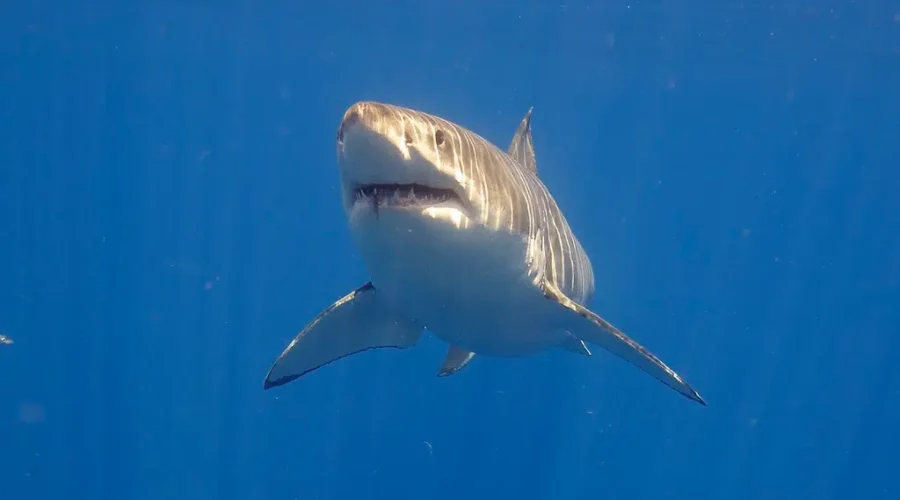
Great white sharks are being seen earlier in Atlantic Canada this year.
Typically, great whites migrate from warmer waters later in the summer and fall, but this year sharks have been popping up in early July.
In an interview with Acadia News, marine biologist Dr. Neil Hammerschlag said he thinks warmer waters and an abundance of sea life could be attracting the sharks.
“These sharks have mental maps, they remember,” said Hammerschlag. “They spend a little more time here, they wander up to Atlantic water and go ‘yeah, this is pretty good, I’m going to come back next year, maybe I’ll even come back a little earlier.'”
Currently, great white sharks are still considered an endangered species in Canada.
Hammerschlag has researched sharks across the planet, and written more than 150 scientific articles with thousands of citations. While doing research in South Africa, he saw first hand how a significant decrease in shark population could have negative effects on the local ecosystem, and believes the opposite could be happening in Atlantic Canada.
“I think it’s an absolute win, and I think this is a very good sign. You need healthy ecosystems to support great whites,” said Hammerschlag. “I think this is a great sign of a rebounding ecosystem, and I think it shows that Nova Scotia has a bounty that can support them from a food perspective, and that’s probably a sign of healthy oceans.”
Despite their fearsome nature, Hammerschlag said great white shark attacks are extremely rare, and that there’s been no fatal attacks on record in Atlantic Canada. He said movies like Jaws and a natural fear of the apex predator help contribute to the great white’s reputation.
“Actually, we’re not their natural prey item, we’re very fortunate we’re not on their menu,” said Hammerschlag. “If they wanted to, they could, and they don’t. I think that tells us something.”
According to the Canadian Shark Research Laboratory, the second largest great white shark ever recorded was caught off the coast of P.E.I in 1983, measuring 5.2 m (17.06 feet).
Hammerschlag said that although he still goes in the water and people shouldn’t be afraid to partake in “Canada’s ocean playground”, he does recommend being aware of the conditions that make a shark attack more likely.
Keeping an eye out for potential prey, like seals or an abundance of fish, avoiding swimming in deep waters at dusk or dawn and staying away from fisherman who might attract sharks with a struggling fish on the line are all habits Hammerschlag recommends to be “shark smart”.
“A lot of shark bites on people are just shark mistakes,” said Hammerschlag. “Why not reduce the chance of a shark making a mistake?”
His last piece of advice is to listen to your gut.
“A lot of people that have been bitten report having a weird feeling like, ‘I should get out of the water’,” said Hammerschlag. “And they ignored that gut feeling and got bitten. Its possible our subconscious knows something that our conscious doesn’t. I would just say listen to your inner voice.”